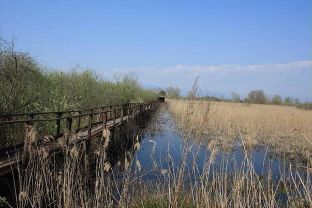
L’ambiente naturale e il Bosco di Tanali
Il Bosco di Tanali è una Riserva Naturale ai sensi della legge regionale 30 del 19 marzo 2015 (Norme per la conservazione e la valorizzazione del patrimonio naturalistico-ambientale regionale). L'area di Bosco Tanali è protetta dal 1995, è stata la prima area naturale protetta di interesse locale (ANPIL) istituita dalla Regione Toscana. Tutta la zona è stata proposta come zona umida di importanza internazionale ai sensi della Convenzione di Ramsar dalla regione Toscana nell'ambito dell'iniziativa MedWet.
L'ente gestore è il Comune di Bientina, con l'ausilio di un Comitato di Gestione (con rappresentanti di Comune, Associazioni ambientaliste, Provincia, Università di Pisa, Provveditorato agli studi) e di una commissione consultiva (rappresentanti di associazioni agricole, venatorie e ambientaliste). L'amministrazione ha stipulato una convenzione con Legambiente Valdera per la gestione della didattica ambientale e per il monitoraggio dello stato dell'ambiente.
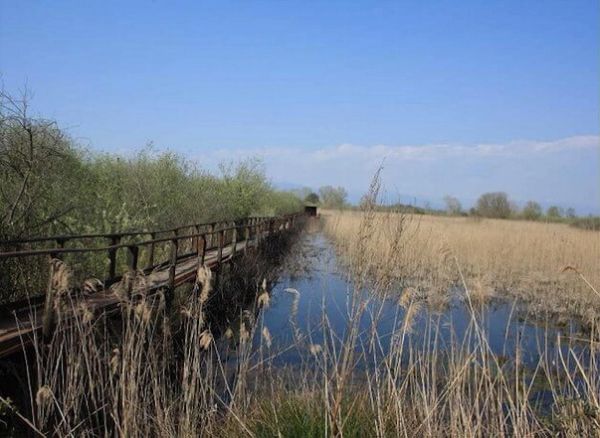
La Riserva Naturale di Bosco Tanali rappresenta un antico lembo del Padule di Bientina che, nei primi anni del ‘900 fu arginato per convogliare in esso le acque di Rio Tanali e del Rio della Valle degli Alberi creando una “cassa di colmata”. Tutta la zona degrada in modo regolare dalle pendici del Monte Pisano verso il centro del bacino di Bientina. La pendenza in direzione Ovest-Est (da 20 m. slm della ss. 439 fino ai 5 m. del punto più basso a ridosso del Fosso di Confine) è stata utilizzata agli inizi del secolo per tentare la bonifica idraulica per colmata. La zona centrale si presenta infatti come una cassa di colmata (“bottaccio” in termini locali) circondata da argini in terra; vi sono convogliate le acque del Rio della Valle degli Alberi (da Nord-Ovest) e del Rio Tanali (da Sud) che dopo essere passate lentamente in bacini successivi di colmata, delimitati da argini secondari orientati in direzione Nord-Sud, si raccolgono nel punto più basso, per immettersi attraverso una chiusa nel Fosso di Confine.
L’opera idraulica è virtualmente ancora in funzione, ma invece di eliminare progressivamente il carattere palustre della zona, ha determinato l’effetto opposto di conservazione degli habitat palustri tipici ed ecosistemi igrofili di grande valore naturalistico.
The natural environment and the Tanali forest
Tanali forest is a Nature Reserve under Regional Law 30 of 19 March 2015 (Norms about the conservation and valorization of the regional environmental-naturalistic assets). Bosco Tanali area has been protected since 1995; it was the first protected natural area of local interest (ANPIL) established by the Region of Tuscany. The entire area has been proposed as a wetland of international importance under the Ramsar Convention by the Region of Tuscany as part of the MedWet initiative.
The managing body is the Municipality of Bientina, with the assistance of a management committee (composed by representatives of the municipality, environmental associations, the province and the University of Pisa) and an advisory commission (composed by representatives of agricultural, hunting and environmental associations).
The administration stipulated a convention with Legambiente Valdera about the management of environmental education and for monitoring the state of the environment.
The Bosco Tanali Nature Reserve represents an ancient strip of the Bientina Marshes that was dammed in the early 20th century to channel the waters of Rio Tanali and Rio della Valle degli Alberi into it, creating a ‘flood plain’.
The whole area slopes smoothly from the peaks of Monte Pisano towards the center of the Bientina basin. The slope going from west to east has been used in the early years of the century to try an hydraulic remediation by filling. In fact, the central area presents itself as a floodplain (“bottaccio” in local terms) surrounded by dirt embankments; waters from Rio della Valle degli Alberi (from north-west) and Rio Tanali (from south) flow into it, then pass through several floodplains and end up at the lowest point to then channel into the Confine ditch.
The hydraulic work is virtually still in operation, but instead of progressively eliminating the marshy character of the area, it has had the opposite effect of conserving typical marshy habitats and hygrophilous ecosystems of great naturalistic value.
La flora
Il Bottaccio di Tanali rappresenta, dal punto di vista botanico, un interessante residuo dell’ex Padule di Bientina e ciò per almeno due motivi: conserva tuttora alcuni biotopi vegetazionali tipici delle aree palustri e che sono in progressiva rarefazione, sia a livello locale che nazionale; racchiude in sé specie botaniche di notevole rarità che, nonostante alcune pratiche di ceduazione ed alcuni tentativi poco produttivi di intervento agricolo, sono qui rimaste confinate e rappresentano molto probabilmente le discendenti ultime di una flora che popolava estesamente il Lago di Bientina ed è sopravvissuta alle ultime vicende climatiche e geologiche del Pliocene e del Quaternario (glaciazioni).
In quest’area si possono osservare alcuni particolari habitat:
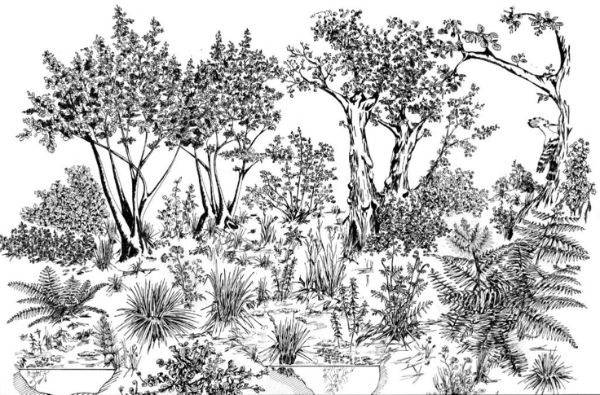
Boschi igrofili e mesofili
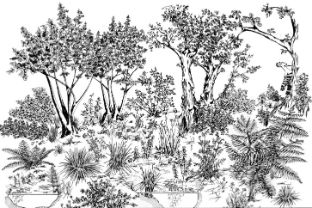
Periodicamente allagati, hanno una composizione floristica assai varia e diversa a seconda del grado di umidità del terreno: nella parte compresa tra la stradella di accesso e la massicciata della vecchia ferrovia, le entità tipiche dei suoli inondati (ontano nero, pioppo, frangula, salicone, felce florida) si frammistano ad elementi mesoigrofili quali farnie (delle quali alcuni esemplari sono giganteschi e secolari), aceri campestri, sambuco, varie specie di Rubus ed anche interessanti elementi arbustivi come il pallon di maggio (Viburnum opulus). Man mano che si procede verso la bassura palustre il terreno diviene progressivamente più umido ed asfittico ed il bosco assume il carattere di una ontaneta planiziale con una componente arborea quasi monospecifica: l’ontanonero. Il sottobosco presenta elementi tipici dei suoli fangosi ed inondati quali il Galium palustre, Alisma plantago, l’Iris pseudacorus, la Carexpendula e Carex elata, il Myosotis palustre, gli equiseti, l’Angelica sylvestris, la Cardamine pratensis, il Lycopus europeus e l’Osmunda regalis; con un fitto corteggio di liane rampicanti (Clematis, Humulus lupulus, Hedera helix).
The flora
The Bottaccio of Tanali represents, from a botanical point of view, an interesting remnant of the former Bientina Marshes for at least two reasons: it still conserves some vegetation biotypes typical of marshy areas that are progressively becoming rare, both locally and nationally; it contains botanical species of considerable rarity that, despite some coppicing practices and some unproductive attempts at agricultural intervention, have remained confined here and most probably represent the last descendants of a flora that extensively populated Lake Bientina and survived the last climatic and geological events of the Pliocene and Quaternary (glaciations).
In this area it’s possible to observe some particular habitats:
Hygrophilous and mesophilous forests
Periodically flooded, they have a very varied floristic composition that differs according to the degree of soil moisture: in the part between the access road and the embankment of the old railroad, entities typical of flooded soils (black alder, poplar, frangula, salicona, florid fern) are intermixed with meso-hygrophilous elements such as farnias (of which some specimens are giant execolarians), field maples, elder, various species of Rubus and also interesting shrubby elements such as may pallon (Viburnum opulus). As one progresses toward the marshy lowlands, the soil becomes progressively wetter and more asphyctic and the forest takes on the character of a lowland alder forest with an almost monospecific tree component: the alderblack. The undergrowth has elements typical of muddy and flooded soils such as Galium palustre, Alisma plantago, Iris pseudacorus, Carexpendula and Carex elata, Myosotis palustre, horsetails, Angelica sylvestris, Cardamine pratensis, Lycopus europeus and Osmunda regalis; with a dense retinue of climbing lianas (Clematis, Humulus lupulus, Hedera helix).
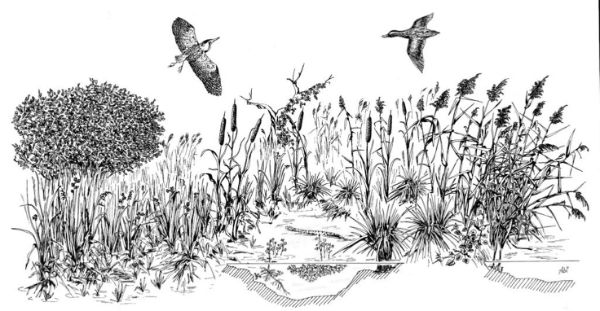
Canneti
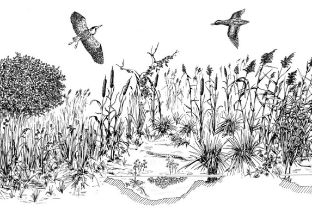
Nella parte più orientale del bacino di colmata è insediata in modo quasi uniforme una densa vegetazione a cannella palustre (Phragmites australis). Floristicamente pressoché monotipico, il canneto dal punto di vista vegetazionale rappresenta una associazione piuttosto degradata che si comporta quasi come infestante nei confronti delle altre cinture igrofile (come ad es. il cariceto) tendendo a sostituirle. Il canneto può tuttavia offrire rifugio ad importanti specie ornitiche (es. itarabusini, i cannareccioni, le cannaiole) per cui ha, nonostante la sua invadenza, una certa importanza e specificità ecosistemica.
Reedbeds
A dense marsh cinnamon (Phragmites australis) vegetation is almost uniformly established in the easternmost part of the fill basin. Floristically almost monotypic, the reedbed from the vegetation point of view represents a rather degraded association that behaves almost as a weed against other hygrophilous belts (such as sedge) tending to replace them. However, the reedbed can provide shelter for important ornithological species (e.g., itarabusians, reed warblers) so it has, despite its invasiveness, a certain ecosystem importance and specificity.
Magnocariceti
Nelle aree più depresse del canneto, dove più lungamente permane l’acqua, si insedia un’associazione vegetale dominata dalle cespitose formazioni dei grandi carici (Carex elata), con le radici immerse nell’acqua: sono i ciuffi del “salicchio”, con i quali si impagliavano le sedie ed i fiaschi, e ben noti ai vecchi agricoltori del Padule. Il magnocariceto, oltre ad essere una tipica forma vegetazionale igrofila relitta in via di diminuzione su tutta l’area del Bientina (anche per l’avanzata della cannuccia palustre), rappresenta un ecosistema assai specifico ed offre ospitalità a specie tipiche come la Stachys palustris, il Peucedanum palustre, la Calystegia sepium, il Galium palustre o naturalizzate come l’Aster novibelgi.
In un piccolo canale interno all’area del cariceto abbiamo inoltre rinvenuto quella che è, forse, l’unica stazione superstite nel Padule di Bientina di Hottonia palustris, pianta microtermica della famiglia delle Primulacee, ormai rarissima in tutta l’Italia Peninsulare.
Magnocariceti
In the most depressed areas of the reedbed, where the water lingers the longest, a plant association dominated by the cespitose formations of large sedges (Carex elata), with their roots submerged in the water, is established: these are the tufts of the “willow,” with which chairs and flasks were stuffed, and well known to the old farmers of the Marsh. In addition to being a typical relict hygrophilous vegetation form that is decreasing over the entire Bientina area (also due to the advance of marsh reed), the magnocariceto represents a very specific ecosystem and offers hospitality to typical species such as Stachys palustris, Peucedanum palustre, Calystegia sepium, and Galium palustre or naturalized ones such as Aster novibelgi.
In a small channel within the sedge area we also found what is, perhaps, the only surviving station in the Bientina Marshes of Hottonia palustris, a microthermic plant of the Primulaceae family, now extremely rare throughout Peninsular Italy.
La fauna
L’area di Tanali racchiude una serie di habitat caratterizzati da specifici biotipi vegetazionali e faunistici di estremo interesse; inoltre il periodico allagarsi dei vari ambienti crea una ulteriore diversificazione stagionale degli stessi.
La stessa zona può quindi offrire nella successione stagionale differenti habitat idonei a numerose specie animali; ad esempio, per quanto riguarda l’avifauna, una stessa area può essere adatta, con il variare delle stagioni, come luogo di svernamento per alcune specie mentre per altre come area di sosta durante la migrazione o infine come sito adatto alla riproduzione.
Nei boschi igrofili e mesofili sono state osservate specie migratrici o parzialmente tali come l’usignolo (Luscinia megarhynchos), cinciallegra (Parus major), cinciarella (Parus caeruleus),scric_ciolo (Troglodytes troglodytes), merlo (Turdus merula), verdone (Carduelis chloris), gazza (Pica pica), e inoltre l’allocco (Strix aluco) specie invece prevalentemente sedentaria.
E’ presente anche una colonia di aironi cenerini (Ardea cinerea).
Il canneto invece offre un sito adatto per la riproduzione a specie quali cannareccione (Acrocephalus arundinaceus), usignolodi fiume (Cettia cetti), cannaiola verdognola (Acrocephalus palustris), cannaiola (Acrocephalus scirpaceus) alle quali è associata la presenza come parassita di cova del cuculo (Cuculus canorus) e infine al tarabusino (Ixobrychus minutus). Inoltre gli alberi posti lungo l’argine esterno del Tanali sono risultati luoghi adatti per la nidificazione del pendolino (Remiz pendulinus), il simbolo della riserva insieme alle foglie dell’ontano.
The fauna
The Tanali area encompasses a number of habitats characterized by specific vegetation and wildlife biotypes of extreme interest; in addition, the periodic flooding of the various environments creates additional seasonal diversification of the habitats.
The same area may thus offer in seasonal succession different suitable habitats for numerous animal species; for example, with regard to avifauna, the same area may be suitable, as the seasons change, as a wintering site for some species while for others as a staging area during migration or finally as a suitable site for reproduction.
Migratory or partially migratory species such as nightingale (Luscinia megarhynchos), titmouse (Parus major), titmouse (Parus caeruleus),scric_ciolo (Troglodytes troglodytes), blackbird (Turdus merula), greenfinch (Carduelis chloris), magpie (Pica pica), and in addition tawny owl (Strix aluco) were observed in the hygrophilous and mesophilous forests, while the predominantly sedentary species was observed.
A colony of grey herons (Ardea cinerea) is also present.
The reedbed, on the other hand, provides a suitable breeding site for species such as reed warbler (Acrocephalus arundinaceus), river warbler (Cettia cetti), green reed warbler (Acrocephalus palustris), reed warbler (Acrocephalus scirpaceus) with which is associated the presence as a brooding parasite of cuckoo warbler (Cuculus canorus) and finally the bittern (Ixobrychus minutus). In addition, the trees located along the outer bank of the Tanali have proven to be suitable nesting sites for the penduline tree (Remiz pendulinus), the symbol of the reserve along with the alder leaves.

~2025-12-29-11-51-10-399~cache.jpg "Pendolino (Remiz Pendulinus)")
~2025-12-29-11-51-10-399~cache.jpg "Pendolino (Remiz Pendulinus)")